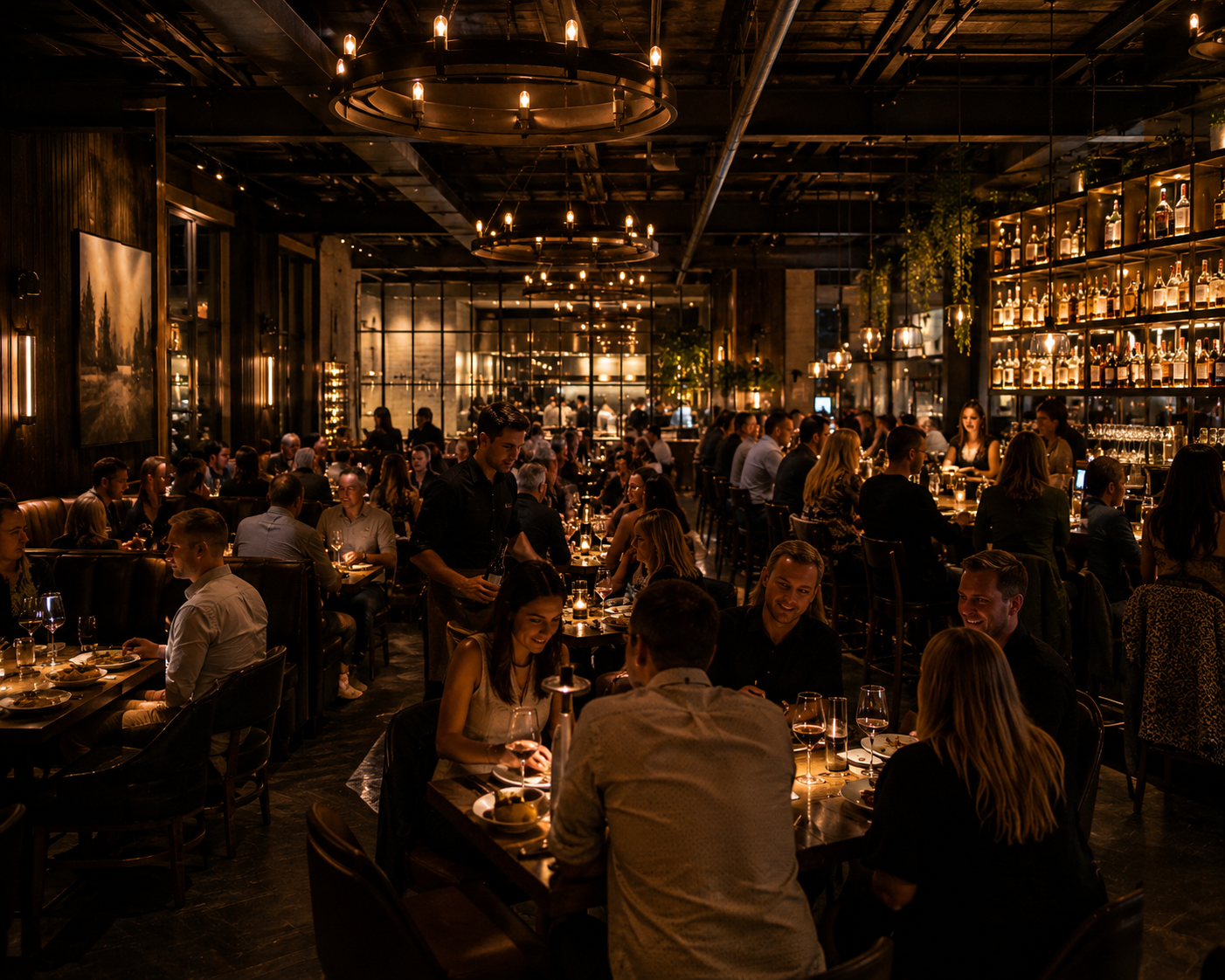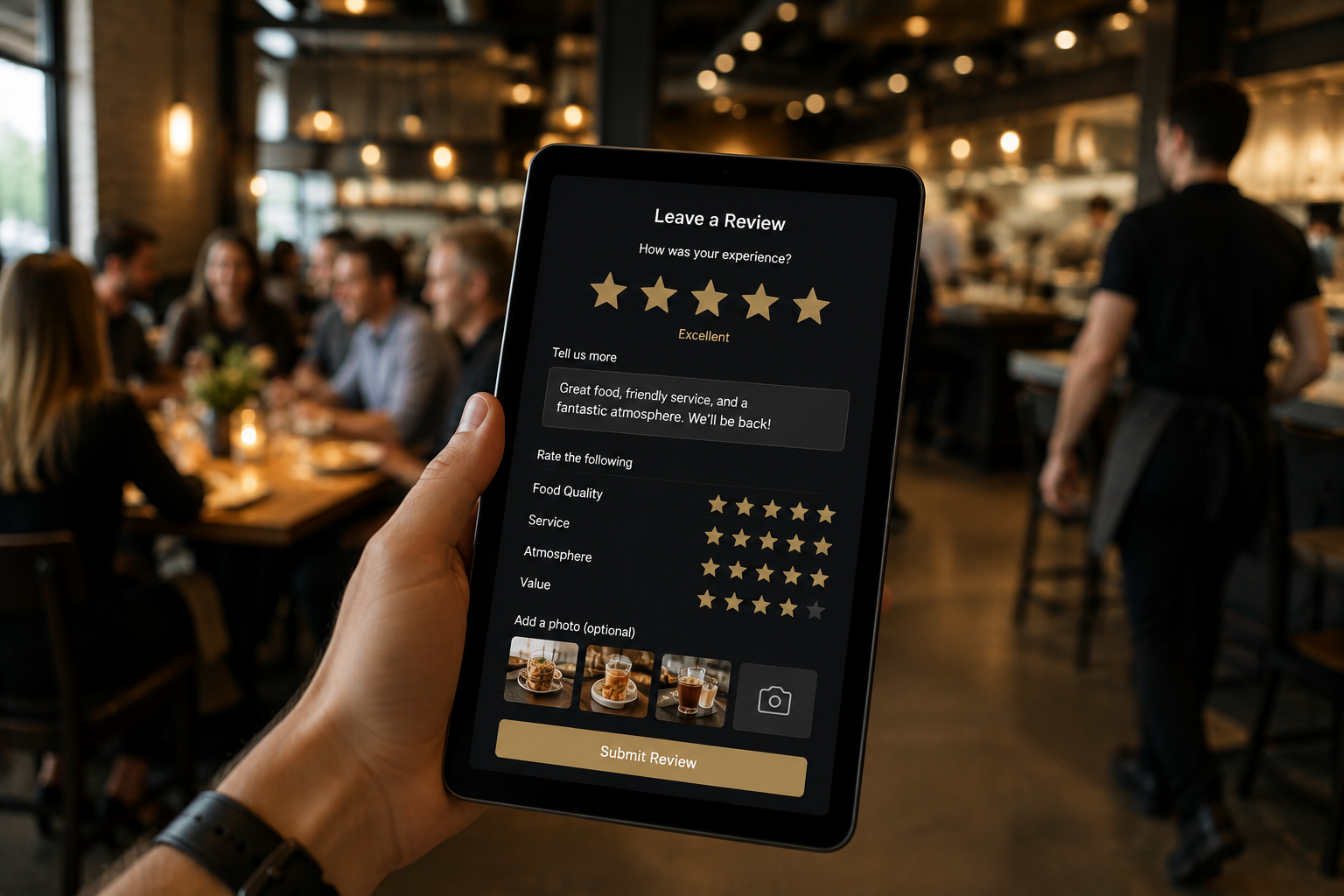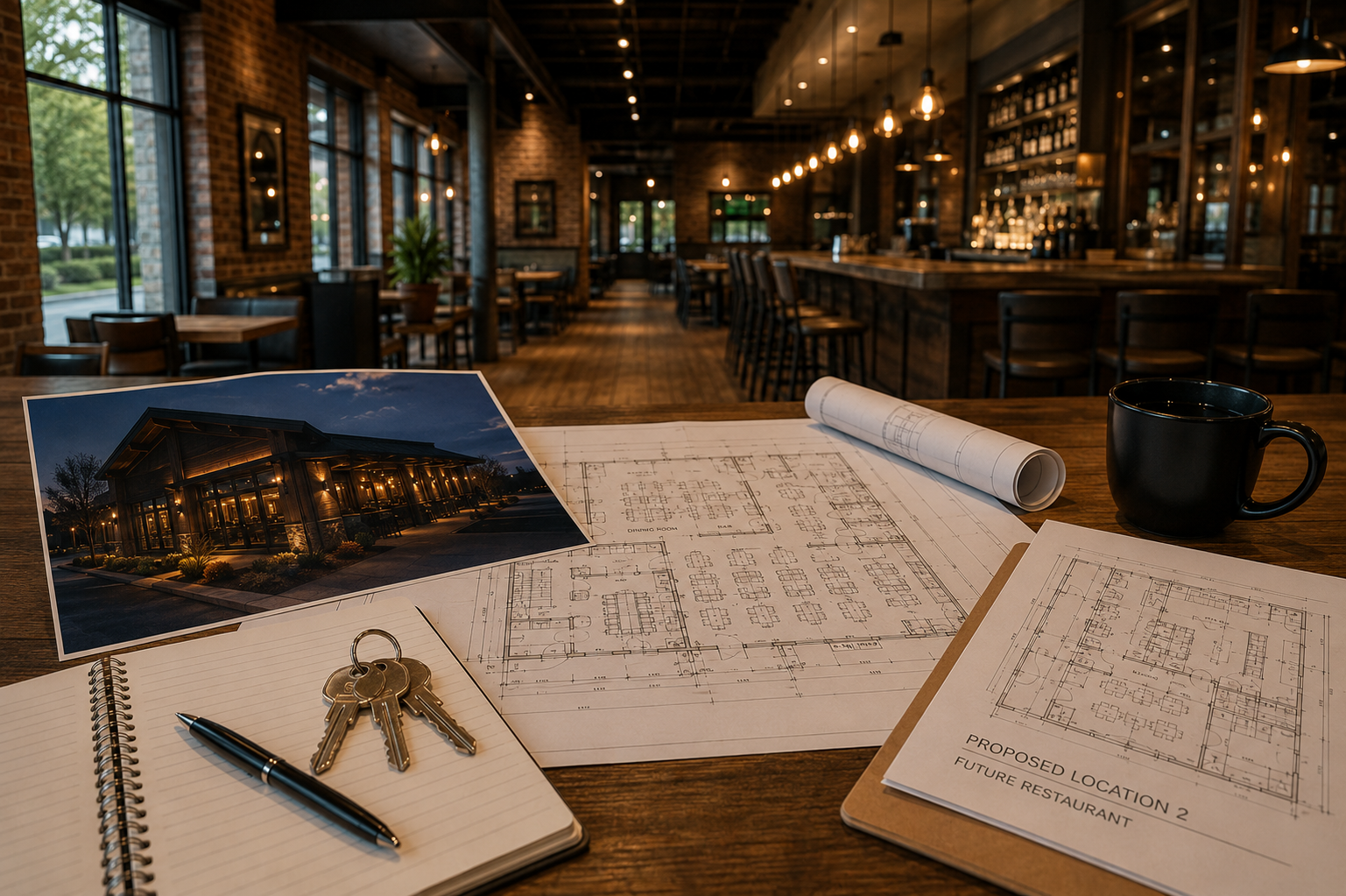
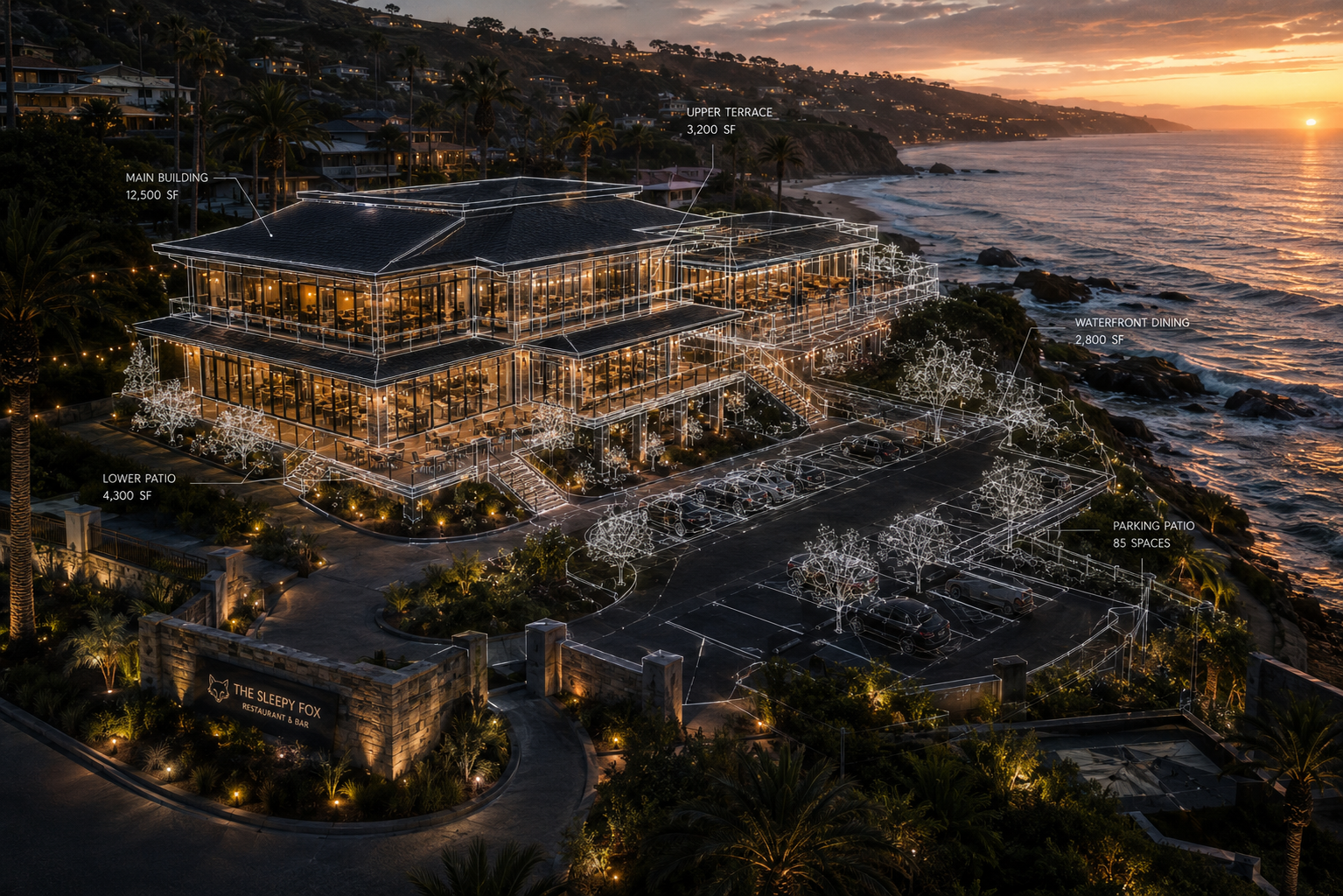
Restaurant space is not ordinary retail space
Food and beverage can bring energy, identity and repeat traffic to a real estate project. It can also become one of the most expensive uses to get wrong.
A restaurant tenant needs more than frontage and square footage. Kitchen exhaust, grease, gas, electrical service, plumbing, refrigeration, receiving, trash, acoustics, storage and loading all affect whether the space can support the concept. Once those systems are designed or built incorrectly, the fix is rarely cheap.
That is why hospitality strategy is most valuable early — when the development team can still shape the space, economics and operator criteria instead of trying to solve around a finished building.
Where food and beverage creates value in a development
Mixed-use and retail
Restaurants, bars and coffee concepts can give a project a reason to be visited outside of a single shopping trip or office day. The right mix can extend dwell time, create evening traffic and make the property feel active rather than simply occupied.
Multifamily
In residential projects, food and beverage can support the amenity story and create a natural gathering place. The program might be a true public restaurant, a resident-focused bar or lounge, coffee and grab-and-go, or a hybrid that serves both the building and the neighborhood.
Hotels
Hotel F&B has to work for two audiences at once: the guest staying upstairs and the local customer who has other choices. A restaurant that only works as a hotel amenity often leaves revenue and brand value on the table; a concept that ignores hotel guests creates a different problem. The programming has to balance both.
Office and commercial projects
Food and beverage can improve the everyday usefulness of an office project, but the concept has to fit the demand pattern. Speed, price, grab-and-go capability and weekday volume may matter more than a highly ambitious dining concept that depends on nights and weekends.
What a hospitality consultant can do for a development team
F&B programming and concept strategy
Before choosing an operator, define what the project actually needs from food and beverage. That work usually includes the market, the guest, the dayparts, the price point, the competitive set and the role each F&B space is expected to play in the project.
- Trade-area and competitive analysis
- Guest and demand analysis
- Recommended mix of restaurant, bar, coffee, grab-and-go or other F&B uses
- Concept positioning and price-point guidance
- Early space allocation and capacity planning
- Daypart strategy and operating assumptions
Operator evaluation and tenant fit
A strong restaurant brand is not automatically the right tenant. The development team should evaluate operating experience, capital, concept fit, financial assumptions and whether the operator's plan matches the realities of the site.
- Concept and business-plan review
- Capital and working-capital assessment
- Operating track-record review
- Fit with the project's positioning and customer base
- Operational review of proposed lease terms, TI assumptions and space requirements
Financial feasibility
F&B decisions affect both the tenant and the real estate economics. A feasibility review can help the developer understand whether projected restaurant sales support the proposed rent, how much capital the space may require and whether the operator has enough runway to reach stable operations.
- Revenue and unit-economics modeling
- Rent and occupancy sensitivity
- Tenant-improvement and project-cost review
- Working-capital analysis
- Review of operator pro formas and sources-and-uses schedules
Design and construction advisory
This is often where hospitality input pays for itself. A few feet of kitchen, an undersized electrical service or a poorly located bar can permanently affect revenue and labor. The design should be reviewed through the lens of the operation that has to live inside it.
- Kitchen sizing and adjacencies
- Mechanical, electrical, plumbing and gas needs
- Exhaust, make-up air and grease systems
- Bar placement, underbar equipment and plumbing
- Storage, receiving, trash and delivery access
- Guest flow, service paths and queueing
- Acoustics and separation from residential, hotel or office uses
Opening and activation planning
The opening plan should match the role the restaurant plays in the larger project. A flagship mixed-use tenant may need a coordinated launch with the property; a hotel restaurant may need a longer soft-opening period; a resident amenity may need a completely different adoption strategy.
- Opening timeline and critical-path review
- Soft-opening strategy
- Marketing and property coordination
- Operational readiness review
- Early performance review and adjustment
When should a developer bring in hospitality expertise?
The earlier the better — ideally before F&B square footage, utility capacity and major circulation decisions are locked. The consultant can still add value later, but the type of value changes as the project progresses.
- Vision / pre-design: F&B strategy, space program, use mix — prevents wrong-size spaces, weak demand fit, missed activation opportunities
- Schematic design: kitchen/bar planning, utility and flow review — prevents expensive redesign, capacity constraints, poor adjacencies
- Design development: detailed operational review, operator criteria — prevents late equipment/MEP changes and tenant mismatch
- Construction documents: specification and constructability review — prevents coordination gaps and avoidable change orders
- Construction / leasing: operator evaluation, opening planning — prevents weak tenant selection and rushed activation
- Pre-opening / post-opening: readiness and performance review — prevents slow corrections after launch
Projects that benefit most from F&B strategy
Mixed-use developments
Projects with multiple audiences and dayparts benefit from deliberate programming. The question is not simply how many restaurants fit; it is what combination of uses creates activity without cannibalizing itself.
Hotels and repositionings
New-build hotels and repositionings often need help defining whether F&B should function as an amenity, a local destination or both — and what the space, menu and staffing model need to support that decision.
Adaptive reuse
Older buildings can produce memorable restaurant environments, but they also create technical constraints. Historic structure, floor-to-floor heights, shafts, loading and utility limitations should be tested before the concept is overcommitted.
Urban infill and transit-oriented projects
These sites may have strong traffic but complicated demand patterns. A high-volume weekday concept, neighborhood bar and destination dinner restaurant can each make sense — but they require different footprints, capital and operating assumptions.
What to look for in a hospitality consultant
- Hands-on restaurant operating or development experience
- Financial modeling that connects real estate assumptions with restaurant economics
- Enough design and construction knowledge to identify operational issues early
- A practical understanding of staffing, menu, bar and service models
- The ability to work with architects, interior designers, engineers, leasing teams and ownership without duplicating their roles
- Recommendations that are specific to the project rather than recycled from a generic hospitality playbook
How Newmark Concepts works with development teams
Newmark brings an operator's perspective to development decisions. The focus is on whether the F&B program can attract the right guest, operate efficiently, support the proposed economics and strengthen the project rather than simply filling a retail bay.
Depending on the project, our development advisory work can include concept programming, financial feasibility, operator and business-plan review, kitchen and bar layout advisory, equipment planning, and pre-opening strategy — grounded in the same discipline covered in our guide to restaurant concept development, and shown in practice in our case studies.