A bar program is more than a cocktail list
A strong bar program sits at the intersection of brand, product, pricing, speed, inventory and hospitality. The drinks matter, but so do the glassware, ice, back bar, menu layout, pour specs, prep system and whether the bartender can make the same drink correctly on a busy Saturday night.
When those pieces work together, the bar can be one of the most profitable parts of a restaurant. When they do not, high theoretical margins disappear through over-pouring, slow service, dead inventory, weak pricing and a menu guests do not understand.
Why beverage matters so much to restaurant economics
Beverage generally carries a lower product-cost percentage than food, especially in cocktails and spirits. That makes sales mix important: a restaurant with a well-used bar can generate more contribution dollars without adding the same kitchen labor and production burden required by another layer of food sales.
- Cocktails — about 15–25% typical cost range; moved by spirit selection, modifiers, garnish, yield, menu price
- Spirits — about 18–28%; moved by bottle cost, pour size, pricing and premium mix
- Draft beer — about 18–30%; moved by keg cost, draft loss, pour size and pricing
- Packaged beer — about 22–32%; moved by package cost and selling price
- Wine by the glass — about 28–40%; moved by bottle cost, pour size, preservation and waste
- Non-alcoholic beverages — often very low product cost; moved by ingredients, labor, presentation and menu price
These are broad planning ranges. Actual beverage cost should be modeled from the specific products, pours and prices in the program.
The bar also changes how the rest of the room works
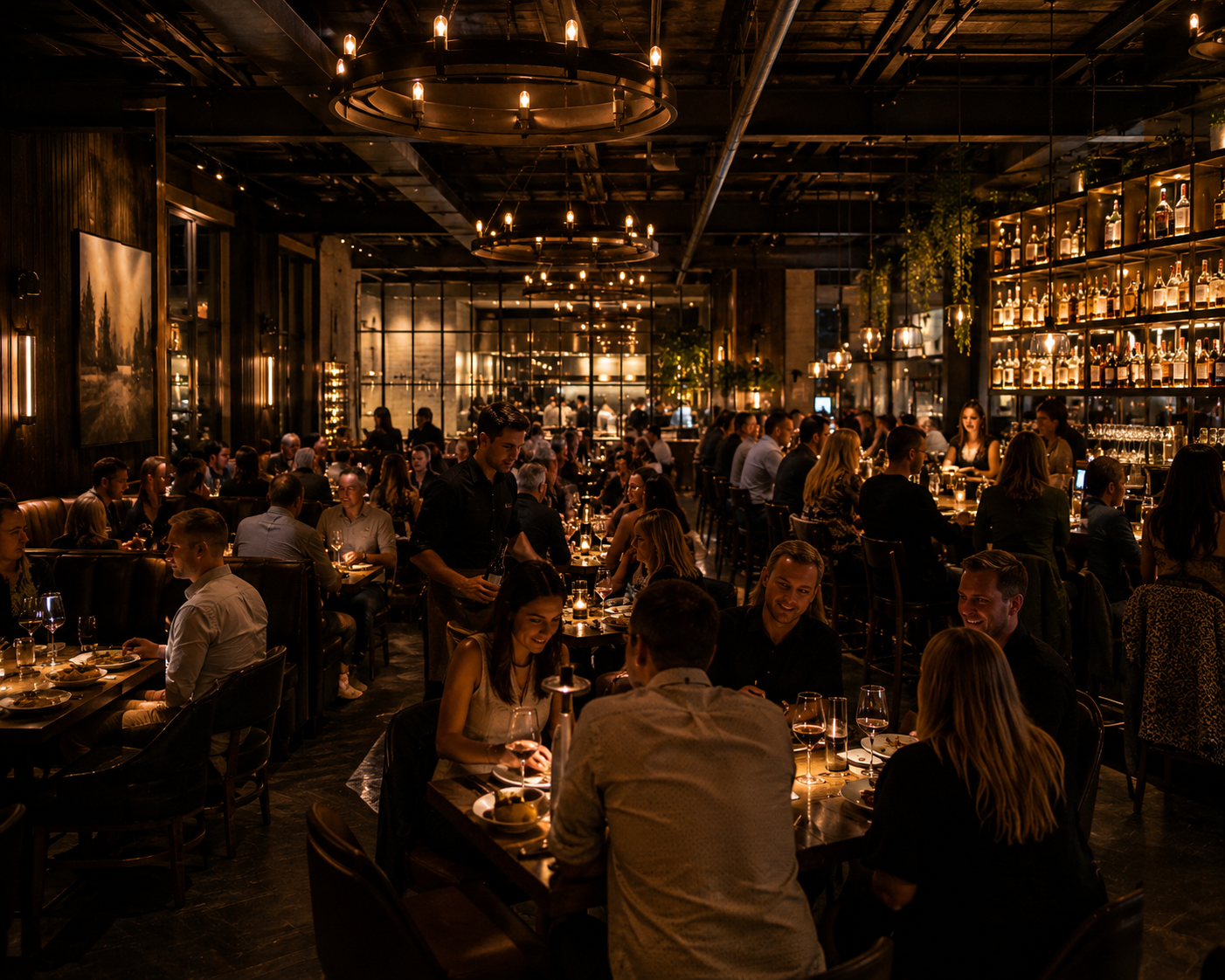
A useful bar can absorb guests while tables turn, create a second reason to visit the restaurant and give the concept an evening life beyond the dining room. But it should be designed as a real revenue center, not simply as a holding area for people waiting on a table.
The bar is part of the brand
Guests often remember the drink they ordered, the glass it arrived in and the way the back bar looked as clearly as the entree. The beverage program should feel like it belongs to the restaurant — not like a generic cocktail menu was dropped into the concept at the end.
What goes into bar-program development
Cocktail menu strategy
A good cocktail menu gives guests enough range without forcing the bar to prep and stock an unnecessary number of ingredients. It should be easy to navigate, distinct to the brand and realistic for the volume.
- Signature drinks that fit the concept rather than chasing every trend
- A mix of familiar, approachable and more distinctive options
- Seasonal rotation that does not create excessive dead inventory
- A serious non-alcoholic section, not one token mocktail
- Batching and prep where it improves speed and consistency
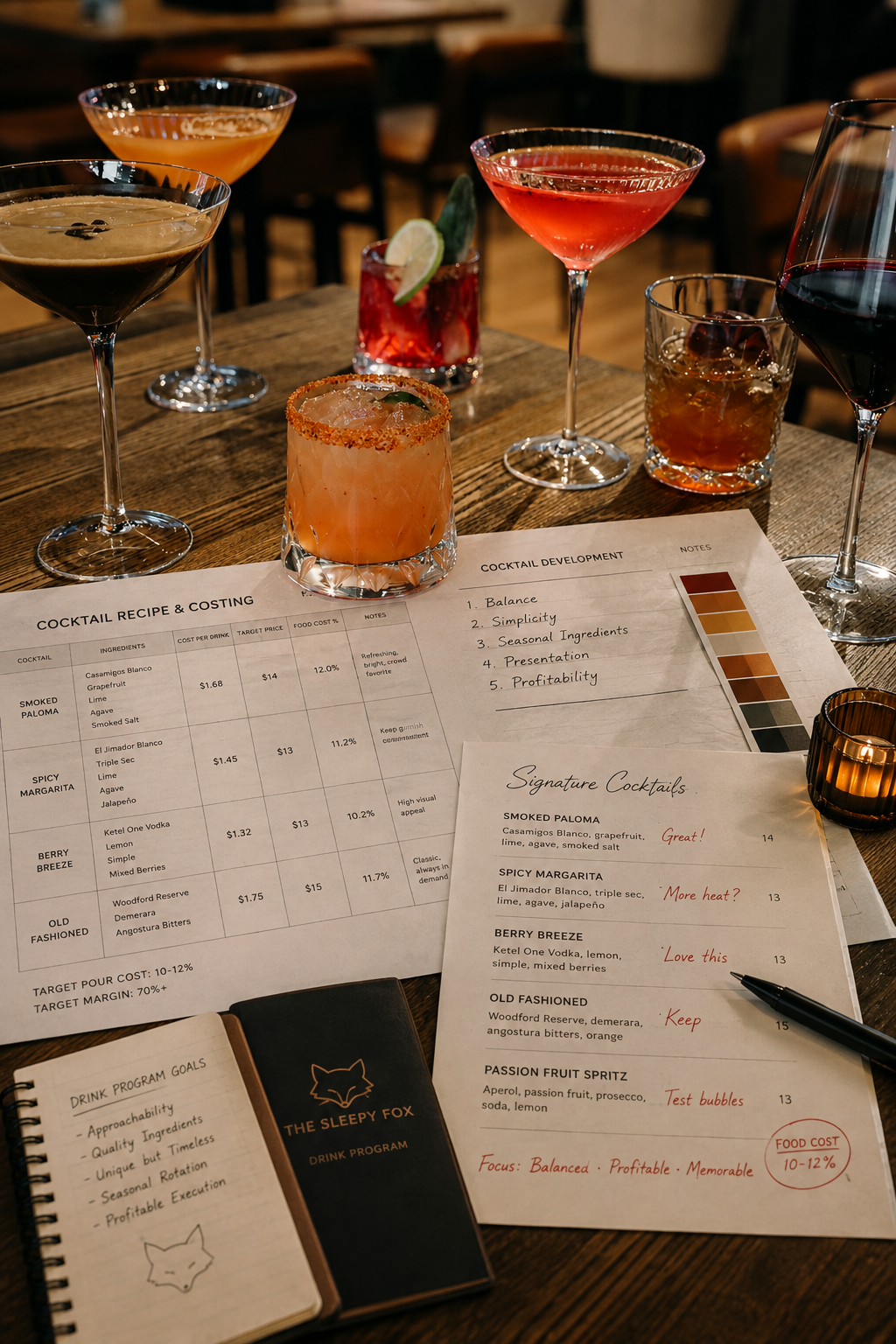
- Recipe costing and menu pricing before launch
Spirits, wine and beer curation
More bottles do not automatically make a better back bar. The selection should support the cocktails, the food, the guest and the intended price points.
- A focused back-bar philosophy and category depth where it matters
- Good-better-best price ladders that create natural trade-up opportunities
- Wine by the glass that complements the food and can be sold with confidence
- A bottle list sized to the concept and storage realities
- Draft and packaged beer that reflect actual guest demand
- Local products where they genuinely improve the story or the selection
Beverage cost and inventory controls
The financial side of a bar program is not complicated, but it has to be consistent. Every recipe should be costed, every pour should be defined and inventory should be counted often enough to spot problems while they can still be corrected.
- Recipe costs and target contribution by item
- Standard pours and jigger or measured-pour expectations
- Physical inventory and usage-versus-sales review
- Waste, comp and spill tracking
- Par levels and purchasing cadence
- Slow-moving inventory review before the back bar turns into a museum
Bar team training
The team does not need to recite a spirits textbook. They do need to know what they are serving, how to make it correctly and how to help a guest choose without making the interaction feel scripted.
- Recipe execution and consistency
- Efficient station setup and prep
- Product knowledge that supports recommendations
- Responsible alcohol service
- Opening, closing and inventory routines
- Service habits that protect speed without making hospitality feel rushed
Bar design and equipment
A cocktail program can only move as fast as the physical bar allows. The layout should be designed around the drinks that will actually be produced, the number of bartenders on peak shifts and the amount of storage the program requires.
- Ice type and ice production
- Underbar refrigeration and reach-in placement
- Speed rails, sinks and dump stations
- Glasswashing and glass storage
- Draft placement and line routing
- POS locations and service wells
- Back-bar display versus practical storage
- Bartender travel distance during a peak shift
Different concepts need different bar programs
Restaurant bars
The bar should support the food, the price point and the pace of the dining room. It needs enough personality to stand on its own without competing with the restaurant's core identity — which is why beverage strategy should be part of concept development from the start, not an afterthought.
Hotel bars
Hotel bars have to satisfy the traveler who wants reliability and the local guest who needs a reason to choose a hotel over a neighborhood bar. A sense of place matters, but so does consistency across breakfast, afternoon and evening staffing.
Standalone cocktail, whiskey and wine bars
Here the beverage program is the concept. Depth, storytelling, hospitality and technical execution matter more because the guest is often choosing the venue specifically for the drink experience.
High-volume and nightlife bars
Speed becomes the design constraint. The menu, prep and station layout should remove steps, reduce decision time and make it possible to produce consistent drinks without turning every order into a five-minute build.
Where a better bar program creates economic upside
The return is not limited to selling more cocktails. A stronger program can improve several parts of the operating model at once.
- Higher beverage mix and average check
- Better contribution margin through pricing and recipe design
- Lower variance from over-pouring, waste and untracked comps
- Faster ticket times and more drinks produced per bartender hour
- Less cash tied up in dead inventory
- Stronger attachment of second drinks, wine and after-dinner beverages
- A bar guests choose intentionally instead of using only when the dining room is full
Those outcomes are measurable — they show up directly in profitability, not just in beverage sales. They are more useful than promising a generic revenue increase that may have little to do with the actual concept.
Signs the bar program needs a reset
- Beverage cost is consistently above target and no one can explain the variance
- The cocktail menu is long, slow or full of low-selling ingredients
- The back bar has significant inventory that rarely moves
- Bar sales are weak relative to the size and location of the bar
- Guests struggle to understand the menu or default to the same basic calls
- Different bartenders make the same drink differently
- Peak service is limited by layout, ice, glassware or prep
- The beverage program feels disconnected from the food and brand
How Newmark Concepts approaches bar-program work
Newmark's bar work starts with the concept and the economics. The goal is not to build the most complicated cocktail list in the market. It is to create a beverage program that fits the guest, can be executed at volume and earns the margin the restaurant is counting on.
Engagements can include beverage strategy, cocktail development, recipe and menu costing, spirits/wine/beer curation, inventory systems, equipment and layout advisory, and opening or relaunch support — see the results in our case studies.