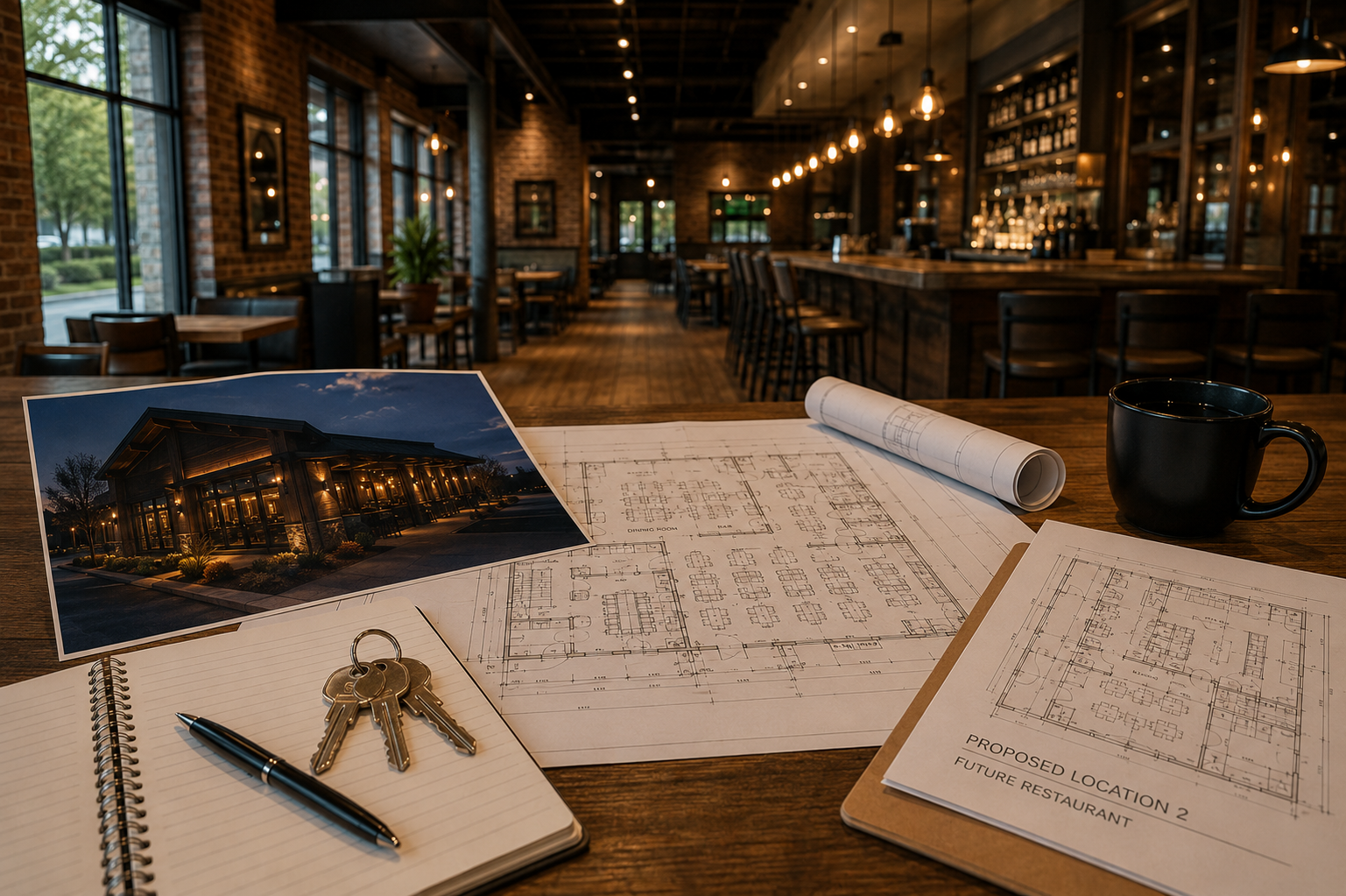
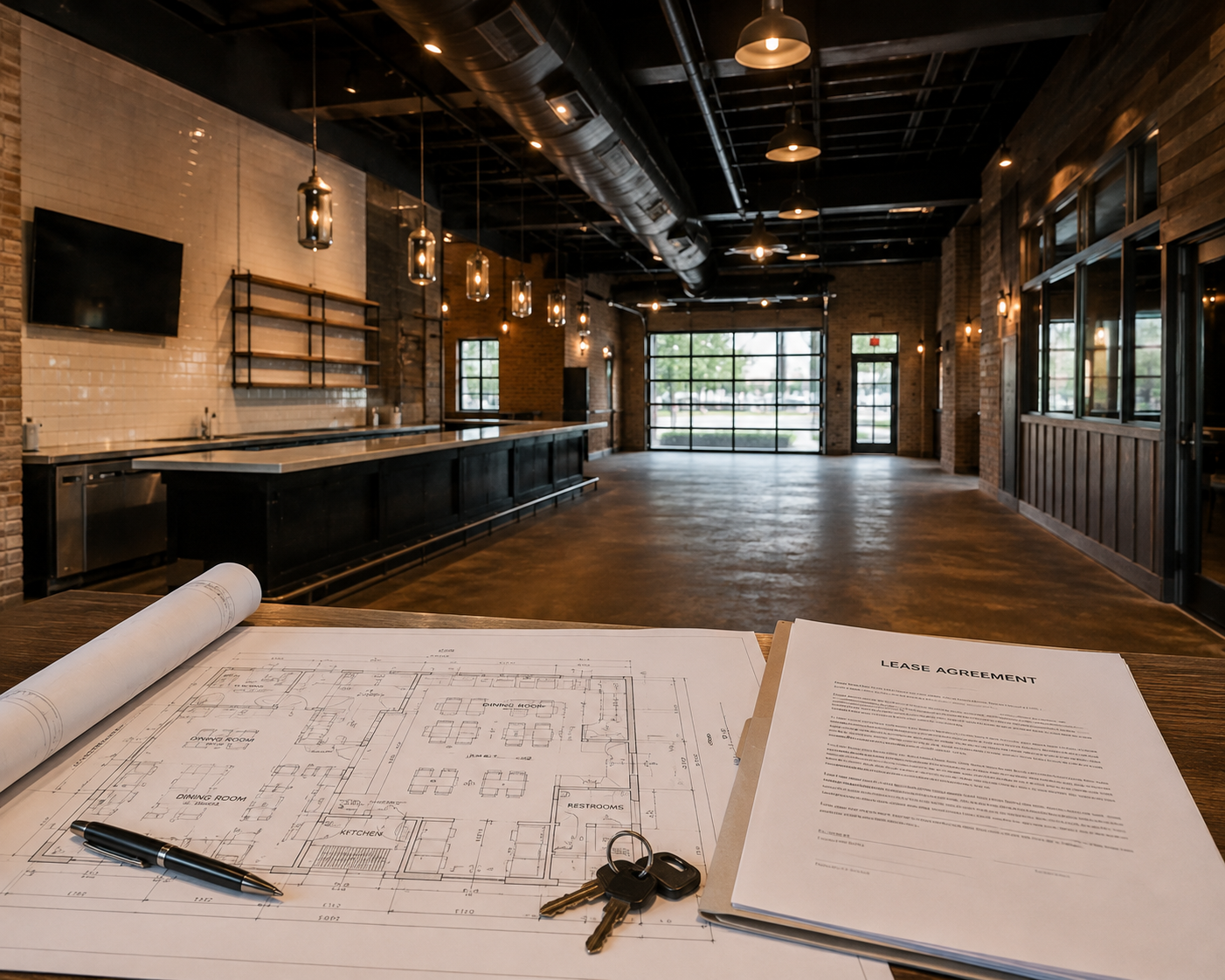
The lease shapes the restaurant long before opening day
First-time operators can spend months on the menu, brand, and design, then move surprisingly fast when the right-looking space appears. That sequence is backwards. The lease sets occupancy cost for years, determines what you are allowed to build and operate, and can leave you carrying expensive obligations long after the excitement of finding the site wears off.
We are not attorneys, and this is not legal advice. A restaurant lease should be reviewed by qualified legal counsel. But legal counsel and an experienced restaurant operator are looking at the same document through different lenses. The attorney is protecting the legal position. The operator also needs to ask whether the deal works for the restaurant day to day.
Base rent is only the first occupancy number
Common area maintenance (CAM)
CAM charges can add materially to base rent and may cover parking lots, landscaping, lighting, shared utilities, repairs, or management costs. We want to understand what is included, what is excluded, how it is reconciled, and whether annual increases can be capped or otherwise controlled.
Percentage rent
Some landlords, particularly in malls and mixed-use developments, want a percentage of sales after a defined breakpoint. That does not automatically make a deal bad, but the breakpoint and definition of sales need to be modeled against a realistic forecast. A term that looks harmless in year one can become expensive if the restaurant performs well.
Property taxes and insurance pass-throughs
Depending on the lease structure, the tenant may carry a share of property taxes and building insurance. Those costs can move over time, so the year-one occupancy number is not enough.
Annual escalations
A 3% annual increase sounds manageable when you are negotiating the opening year. Over a long term, the compounded rent can become a very different occupancy cost. Model the whole term, including options, before deciding what the restaurant can afford.
A TI allowance is only as useful as the reimbursement terms
Tenant improvement money can be one of the most valuable pieces of the deal, especially in a space that needs significant construction. The headline allowance is not the whole story.
- Eligible costs - What work does the landlord consider reimbursable and what is excluded?
- Timing - Is the money advanced, paid in draws, or reimbursed only after completion and inspection?
- Overages - Who pays when the build exceeds the allowance?
- Contractor requirements - Does the landlord control approved contractors, insurance, or bidding?
- Deadlines - When does the tenant lose the right to unused TI dollars?
A generous TI package can still create a cash problem if the operator has to front several hundred thousand dollars and wait for reimbursement. That timing belongs in the opening capital plan from the beginning.
Verify the boring infrastructure before you fall in love with the room
The beautiful windows and corner exposure matter. So do the things nobody posts on Instagram.
- Grease capacity - Is the existing trap or interceptor sized for the concept and compliant with current requirements?
- Electrical service - Can the building support the kitchen, HVAC, bar, lighting, and technology load?
- Hood and exhaust - Is there an existing path, and will it satisfy current code and the proposed equipment line?
- Gas service - Is there enough capacity if the menu depends on gas-fired equipment?
- Use restrictions - Hours, noise, patio limitations, exclusives, parking rules, signage restrictions, and any other provision that conflicts with how the concept is supposed to make money
A great-looking space with inadequate electrical service or no practical exhaust path can create a six-figure problem very quickly. Those are deal questions, not construction surprises.
Term, options, guarantees, and the way out
Longer terms can improve negotiating leverage and provide rent stability, but they also keep you tied to the location if the concept or market changes. Before signing, we want to understand the entire life of the lease, not just the first five years.
- Renewal options - Ideally with a defined method for determining rent so the restaurant is not negotiating from scratch after building the location
- Assignment and sublease rights - A reasonable path to transfer the lease if the business is sold or the operator needs to exit
- Personal guarantee - The amount of personal exposure and whether a burn-off or step-down can be negotiated after a record of performance
- Delivery and opening obligations - What happens if permits, landlord work, utility upgrades, or construction delays push the opening date?
Stay willing to walk away
The hardest part of restaurant real estate is emotional. Once an operator has imagined the bar, the kitchen, the patio, and opening night in a particular building, negotiating leverage starts to disappear. The strongest deals usually come from having more than one viable option and being willing to lose the one that does not work.
A site can be visually perfect and financially wrong. The lease review should answer a simple question before the project moves forward: can this restaurant operate the way it needs to operate, at an occupancy cost the model can support, with construction obligations and exit terms the ownership group understands?